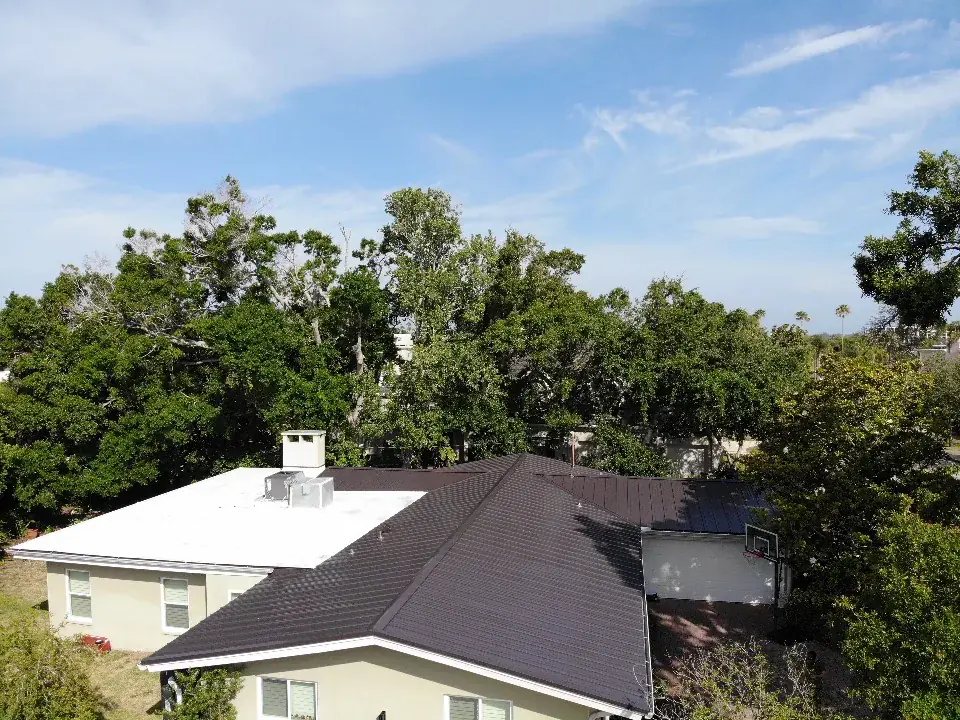
5 Signs It's Time to Replace Your Roof in Florida
Five warning signs Florida homeowners should watch for — curling shingles, leaks, age, storm damage, and rising energy bills.
Read moreRepair advice, warning signs, and when to call a licensed roofing contractor.
Leak tracing, storm wear, and when patches stop making sense. These articles help Tampa Bay homeowners understand why a stain appears where it does and what lasting repairs usually involve at flashings, valleys, and penetrations.
You will see guidance on pipe boots, step flashing, ridge transitions, and the difference between temporary dry-in and permanent work. Storm openings are framed as private-pay emergency response — stabilize first, then repair properly — without insurance-claim coordination language.
When repair is no longer enough, posts point you toward honest replacement conversations, Atlas options on qualifying steep-slope projects, and how written estimates should compare repair versus re-roof side by side so you can budget without guesswork.
Read with your own photos nearby. Matching article examples to stains, missing tabs, or attic moisture marks makes the free inspection conversation faster when you call Roof Monsters afterward.
Browse the posts above, then schedule a free inspection with Roof Monsters. We photograph conditions, explain repair versus replacement in writing, and specify Atlas materials on qualifying steep-slope projects when a full install is the right path.
Dunedin headquarters · (727) 439-3869 · info@roofmonsters.co. Fifteen-year workmanship warranty on qualifying installation labor. Most work still comes from neighbors who recommend us after clean job sites and clear communication.
Storm openings: call for private-pay emergency tarping. Permanent repairs follow with clear estimates — no adjuster coordination or claim-maximizing promises. Temporary dry-in stops water; it is not a finished roof.
Use category reading to build a checklist before contractor visits. Bring questions about ventilation, underlayment, flashing details, and warranty paperwork to your free inspection so the conversation stays specific to your roof instead of generic sales talking points.
Compare what you read here with line items on any bid you receive. If a proposal skips dumpster, drip edge, ventilation, or decking allowances, ask why. Incomplete scopes are a common source of change-order frustration across Tampa Bay.
When you are ready, call (727) 439-3869 or email info@roofmonsters.co. We serve all five counties from Dunedin and will put the next steps in writing — family-owned since 1988, licenses CCC1335398, CCC052490, CBC015719.
Gulf humidity, intense UV, oak litter, and tropical downpours shape every recommendation in this category. Advice written for northern freeze-thaw climates often understates algae growth, attic heat, and wind-driven rain at flashings.
That is why our educational pages keep pointing back to on-site documentation. Articles teach vocabulary; inspections supply the facts for your address. Use both, then decide repair, maintain, or replace with a clear private-pay estimate in hand.
Start with articles about leak tracing, pipe boots, step flashing, and valleys before assuming the entire roof has failed. Tampa Bay water intrusion often travels through attic framing before it stains drywall, so the visible spot rarely tells the whole story. Reading repair guides helps you understand why a contractor may inspect several feet away from the stain and why matching materials matter on older roof planes.
If the repair category points repeatedly to age, soft decking, or failures in different areas, bring that pattern to the inspection. A good repair conversation includes the honest possibility that targeted work may be short-lived. Roof Monsters documents that decision in writing so you can budget without chasing one patch after another.
Emergency work means private-pay tarping or dry-in when water is entering or a roof area is open. Scheduled repair means conditions are stable enough to diagnose carefully, order compatible materials, and complete permanent work during a safer weather window. The articles in this category help homeowners separate those two moments instead of expecting one visit to solve every storm problem.
Call (727) 439-3869 for active openings. For non-urgent leaks, photos, dates, and room locations help us trace the source during a free inspection. Either way, the goal is the same: stabilize what needs immediate protection, then repair with details that fit the existing roof system.
A lasting repair has to work with the roof around it. Mixing incompatible shingles, skipping underlayment transitions, or relying on surface sealant where flashing is needed can move the leak instead of solving it. Repair articles help you ask whether the proposed materials match the age, pitch, and exposure of the existing roof.
Roof Monsters explains those choices in writing because a small repair still deserves a clear scope. If matching materials are no longer available or surrounding tabs are too brittle to lift safely, that finding belongs in the recommendation before work begins.
After an inspection, return to the repair category with the photos and estimate in hand. The articles can help you understand why a pipe boot, valley, chimney flashing, or ridge transition was named in the scope. That makes approval easier and reduces confusion when multiple leak paths are possible.
If the written recommendation differs from what you expected, ask us to walk through the photos. A referral-driven contractor should welcome that conversation because informed homeowners make better repair decisions.